Tags
crime prevention, dreams, dystopian fiction, future life, imprisonment, prediction of criminal behavior, psychological fiction, Science fiction, surveillance detection, women
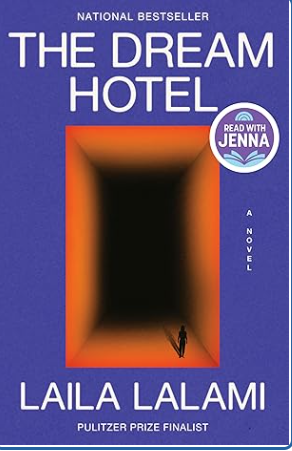
Set in the near future, “The Dream Hotel” imagines a world where companies, and eventually the government, can monitor people’s thoughts and dreams. Returning from a business trip, Sara is stopped at the airport and sent to a retention center. Separated from her husband and children, she and the other female inmates try to find a way to deal with their circumstances and eventually escape them. This dystopian story is thought-provoking and unsettling.
“Stellar…There are echoes of The Handmaid’s Tale here—as Margaret Atwood does in that book, Lalami builds a convincing near-future dystopia out of current events…But Lalami’s scenario is unique and well-imagined—interspersed report sheets, transcripts, and terms-of-service lingo have a realistic, poignant lyricism that exposes the cruel bureaucracy in which Sara is trapped…And the story exposes the particular perniciousness of big tech’s capacity to exploit our every movement, indeed practically every thought…Striking…An engrossing and troubling dystopian tale.”—Kirkus, starred review
“In this sharp, sophisticated novel of forecasts and insightful takes, what I found most powerful was the great bewilderment that the characters share…Perhaps you wouldn’t ordinarily pick up a novel in search of an experience of confusion. But The Dream Hotel has a burning quality, both in its swift, consuming escalation—you can’t look away—and in the clarity and purpose of what it shows.”—The Guardian, “What if AI Could Read Our Minds?”
“Unnerving…Privacy never sounded so good.” —Christian Science Monitor
“A stirring dystopian tale of dwindling privacy and freedom in the digital age…The premise calls to mind Philip K. Dick’s The Minority Report, but Lalami’s version is chillingly original, echoing widespread fears about the abuse of surveillance technology, and she balances high-concept speculative elements with deep character work. This surreal story feels all too plausible.”—Publishers Weekly, starred review

 feastonbooksblog